










Hybrid Cloud and On-Prem in Banking & Credit Unions: Staying Connected Without Compromise
An interview with industry experts Spencer Cayer, President, and Bob Cayer, Co-Founder of Cayer Security. Written by Nikki Williams, Marketing Director at ICT.
The financial security landscape is shifting fast. Branches are spread across wider territories with leaner teams managing them. IT departments are migrating servers to the cloud. And risk managers are being asked to prove they still control their own data, even as they hand more of their infrastructure to outside providers. For banks and credit unions, physical security is no longer a standalone system. It is part of the same conversation as network architecture, HR software and cybersecurity policy.
Cayer Security, a family-owned company founded in Fairfield, Maine, in 1997 by Bob and Cindy Cayer, has spent nearly three decades inside that conversation. Now based in Clinton, Maine, and still family-run today, Cayer designs, installs and maintains security systems for banks and credit unions, from large multi-branch institutions down to Main Street storefronts.
To dig into what hybrid actually looks like in practice, we sat down with Spencer and Bob Cayer to get their take from the field.
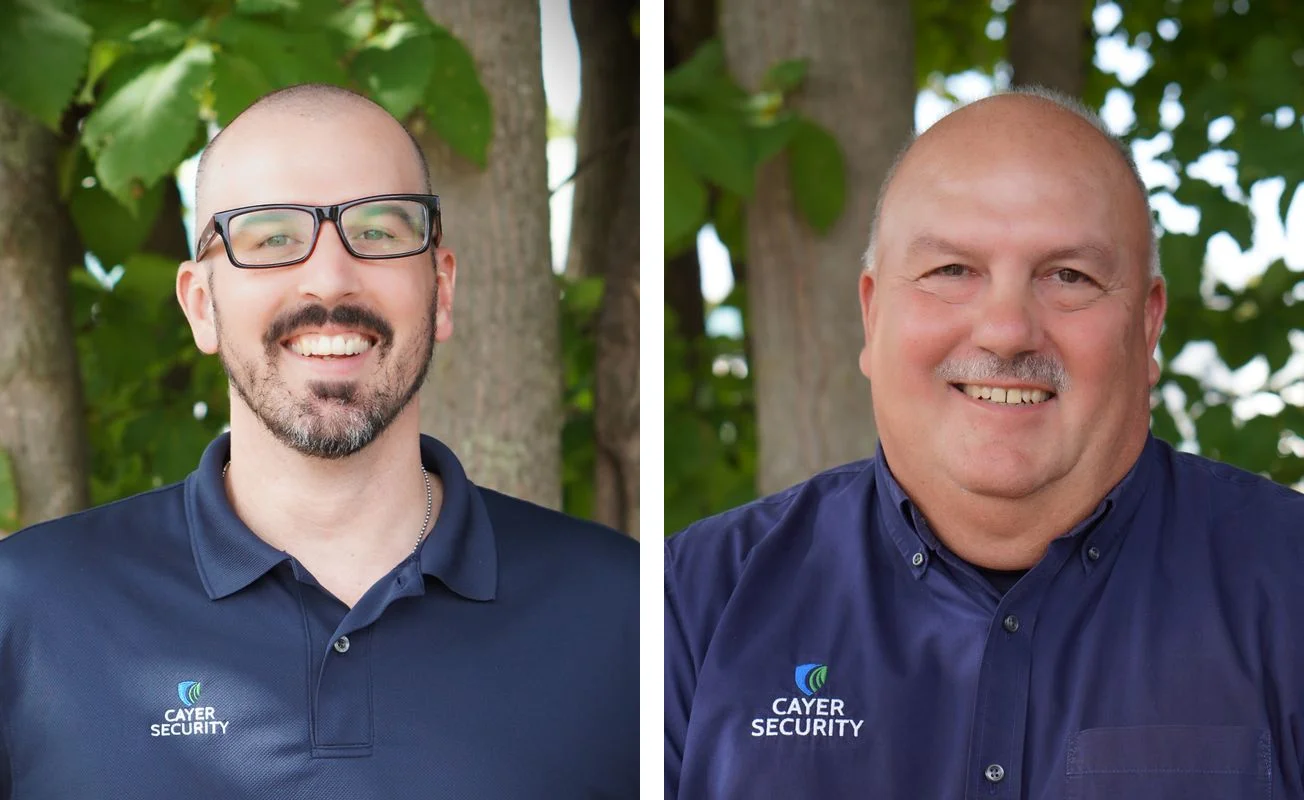
Spencer Cayer, President (left), and Bob Cayer, Co-Founder (right), Cayer Security
What hybrid actually means on the ground
The old model, one server, one building, one IT person walking the floor, does not match how financial institutions operate today. Bob Cayer sees it in the geography his team covers every day. “Most risk managers that are managing these systems are all over the place, especially in the state of Maine,” he said. “Our state is large. It’s not like it’s twenty minutes to get to your job site. Sometimes it’s taking four hours to get there.”
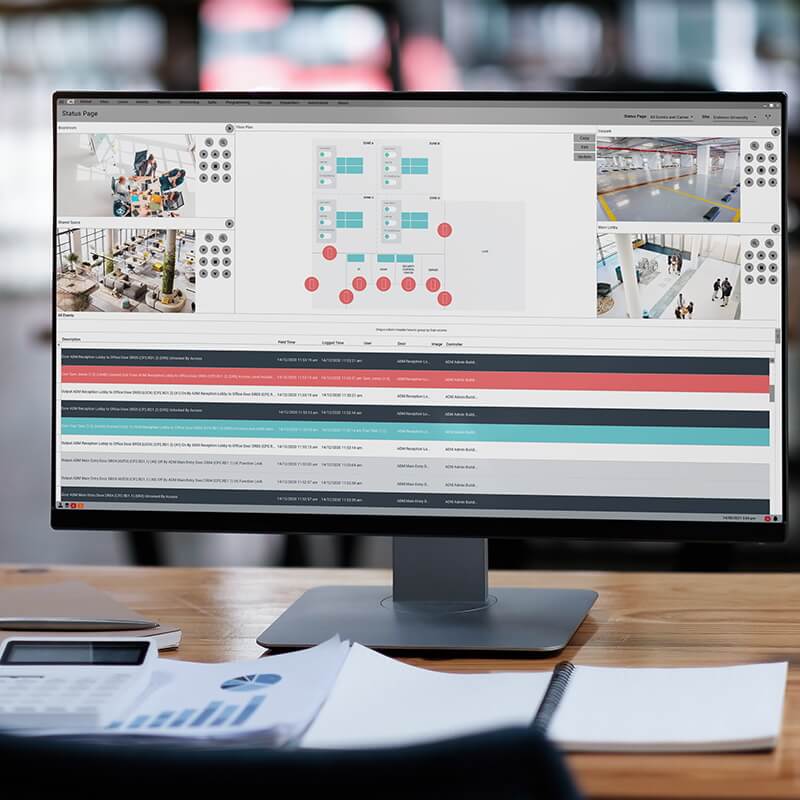
That distance is why remote management has become non-negotiable. “The ability to have the system reside on the financial institution’s server, on premise, but also the flexibility to manage it remotely, so they have kind of the best of both worlds,” Bob said.
The decision doesn’t stay inside the security department, either. Spencer Cayer points to how deeply these systems now sit inside a bank’s broader network. “These are intelligent systems that are very much converged with a bank or credit union’s IT infrastructure with their corporate network,” he said. “As security integrators, we need to really be partners with not only the facility managers or security managers, but also the networking and cybersecurity team.”
Security stopped being a standalone purchase. It became a cybersecurity and stakeholder decision, which is what makes hybrid architecture a conversation for the whole institution, not just the security director.
Questions before equipment
Neither Spencer nor Bob will talk hardware until they understand the institution and the needs in front of them. “You need to ask questions like, ‘What do you have currently for your security infrastructure? What are you using for your intrusion system, your access control? What do you have for a video surveillance system?’” Spencer Cayer said.
Those questions surface disjointed systems, unclear ownership and gaps nobody flagged before a project began. Bob takes it further, wanting to understand the institution before he specs a single piece of equipment. “Understand who you’re talking to, make sure that you get all their needs and their long-term goals of what they’re looking to do,” he said. Work backwards from where the institution wants to end up, then solve for it.
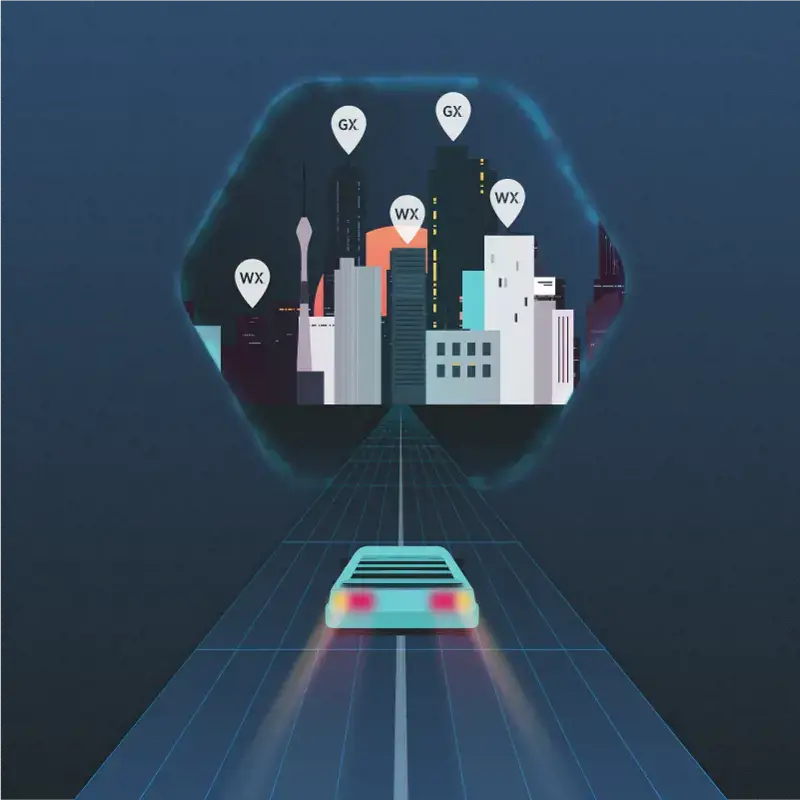
That process is exactly how one Cayer deployment took shape. After listening to the customer and asking the right questions, it was clear resilience and reliability, not just connectivity, was the priority. Cayer designed a system running Protege GX on the customer’s Azure cloud infrastructure, paired with on-premise controllers and readers so the system keeps running through storms and outages. “You’ve got to make sure that your system’s resilient and that it will continue to operate unimpeded by any network connectivity losses,” Spencer said.
Where it breaks
Skipped stakeholders and unanswered ownership questions are the clearest warning signs of a hybrid strategy gone wrong. Bob puts the sharpest point on it. “There’s a lot of systems today where you don’t own the data. If you miss a payment, that data goes away at their discretion,” he said.
It’s a question every bank manager should ask before signing with an integrator, and too many only ask after a relationship has already gone sideways.
What you need to know
Hybrid is not a single architecture. It’s a range of options built around what each institution already owns and where it’s headed, and it only works when data ownership, access levels and export rights are settled up front, not discovered after a payment is missed or a vendor relationship ends.
A phased approach lets institutions modernize without a disruptive rip and replace. Banks and credit unions aren’t choosing cloud or on-prem. They’re choosing who keeps control.
Want to go deeper on hybrid architecture or your specific projects? Contact Cayer Security at (207) 453-9177 or info@cayersecurity.com.