











Your Legacy System Wasn't Built for Where Security Is Headed. Protege GX Is.
Every access control system was cutting-edge once. The one running your buildings today probably was too, back when it went in. But proprietary protocols, closed architectures and limited integration options age fast in a market that keeps demanding more: more third-party compatibility, tighter cybersecurity, credentials that don't lag behind the threat landscape.
If any of the following sound familiar, your current system is the roadblock, not the solution:
- Limited compatibility with the third-party technologies your business now runs on
- Costs that climb every time you need to expand
- Reporting tools that leave you guessing instead of deciding
- Proprietary protocols that box out the functionality you actually need
- Credential technology that can't keep pace with today's security standards
- Lack of compliance with cybersecurity standards
Staying static has a cost too, and it's usually higher than the cost of moving forward.
Why Migration Feels Bigger Than It Needs To
Migrating an access control system touches budget, operations and risk all at once, so it's reasonable to expect friction. Three factors determine how much:
Open protocols. A platform built on open protocols and multiple card formats lets you keep existing readers and credentials rather than ripping out working hardware on day one. That's what keeps a migration cost-effective instead of disruptive.
Interoperability. Access control no longer sits in isolation. It needs to work with your video management, biometric readers, lift systems and building automation, whether through open APIs or established technology partnerships. The integrations your platform offers should match how your facility actually operates.
Security. Cybersecurity standards move constantly, and so do secure credential technologies. A platform that can't keep up with either isn't future-proofed. It's a liability with a countdown on it.
Protege GX: Built To Work With Your Organisation, Not Around It
Protege GX is ICT's open, scalable access control and security platform, engineered so migration works with your existing environment instead of against it.
Native interoperability. ICT's open protocols keep you compatible with existing reader technologies, so current readers and credentials stay in service while new features come online. That's lower upfront cost from day one.
Integrations that do real work. Protege GX connects with CCTV, wireless locking, biometrics, BMS, lift control, intercoms and a SOAP API, unifying operations instead of scattering them across disconnected systems.
One source of truth. ICT Data Sync synchronizes databases from third-party solutions directly into Protege GX, cutting duplicate data entry and giving your team one place to manage it all.
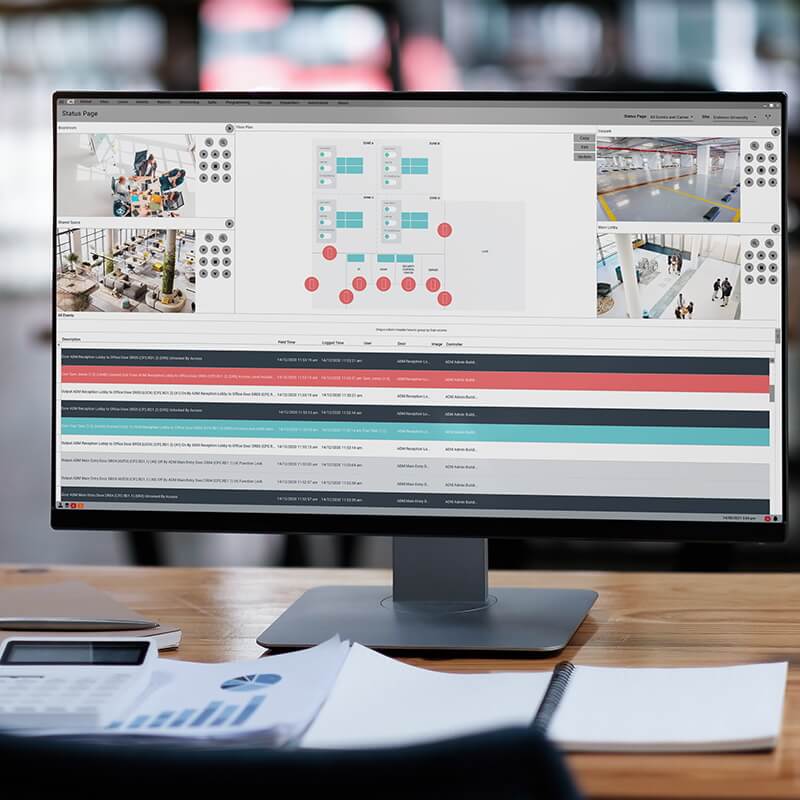
Management that respects your time. User data, reporting and daily security tasks run through one intuitive system, so your team spends less time managing software and more time managing security.
Cybersecurity built in, not bolted on. ICT is certified in ISO/IEC 27001, the global standard for information security management, with security engineered into every level of the business.
Scalability that matches your budget. Whether you're managing tens of doors or thousands, Protege GX scales through flexible licensing for doors and cameras, so growth doesn't mean a budget blowout.
A platform aligned with sustainability goals. Integrating Protege GX with your building management and automation systems supports energy efficiency and a smaller carbon footprint.
Migrate On Your Timeline, Not Ours
There's no single right way to migrate, and ICT's phased approach reflects that.
Scenario 1: Keep your server, add Protege GX capability. Connect your existing server and hardware to the Protege GX server through the Data Sync Service. You gain advanced native intrusion detection, lift integration and broad third-party compatibility, while your current credentials or new ones both work without disruption.
Scenario 2: Run on Protege GX, keep your readers in play. Use the Protege GX server and controllers while integrating existing readers alongside ICT multi-technology readers, most of which support both current and new credentials. This lets you move to a higher security standard at a pace that fits your operation, and it works as a natural second phase after Scenario 1.
Either path lets you upgrade hardware and servers now, and schedule reader and credential updates for when it makes sense for your business.
Organisations That Made The Move
Three Rivers Park District (Minnesota, USA) ran different alarm and access control systems across more than 60 buildings and 405 controlled doors. A phased migration to Protege GX unified access control, intrusion detection and third-party integration under one platform.
"ICT Protege GX has provided our organisation with an efficient and user-friendly solution for our access control and security needs." — Mark Dusbabek, Three Rivers Park District
University of British Columbia unified access control and intrusion detection into a single platform, reducing service issues and improving situational awareness for Campus Security.
"It has simplified design, increased user friendliness, decreased service issues, and improved situational awareness." — John Molnar, Access Services Manager, UBC
Take The Next Step
Migration isn't a leap into the unknown when the platform is built to meet you where you are. Whether you're ready to move now or want to plan a phased path, ICT can help you scope the right approach for your organisation.
Posted on
Product News