












Mobile Credentials: The Future of Access Control Is Already Here
Why Mobile Credentials Are Taking Over
The humble access card has served security professionals well for decades. But as smartphones have become the one device most people carry everywhere, they’ve also become the most convenient access credential available.
Mobile credentials turn any NFC or Bluetooth-enabled smartphone into a fully functional access card. Users tap their phone to a reader — or simply walk up to one — and the door opens. No card to forget, no credential to clone, and no trip to the office to get a replacement.
How Mobile Access Works
Modern mobile access systems use two primary communication technologies:
NFC (Near Field Communication) works similarly to contactless payment. The user holds their phone near the reader, and the credential is transmitted instantly. It’s fast, intuitive, and familiar to anyone who has tapped to pay.
Bluetooth Low Energy (BLE) extends the range slightly and enables “hands-free” experiences — the reader detects the approaching smartphone and unlocks before the user even reaches the door. This is particularly useful in high-traffic environments or for users carrying packages or equipment.
Security Advantages Over Physical Cards
Physical cards have a fundamental vulnerability: they can be lost, stolen, or cloned. A misplaced card might not be reported for days, creating a window of unauthorized access.
Mobile credentials solve several of these problems:
- Device lock protection — a stolen phone is protected by fingerprint, face ID, or PIN
- Remote revocation — credentials can be revoked instantly from any browser
- Tamper detection — modern mobile credential platforms detect jailbroken or compromised devices
- Multi-factor options — biometric authentication on the device adds a second factor at no extra cost
The Business Case for Mobile Access
Beyond security, mobile credentials offer compelling operational benefits:
Reduced administration — issuing a credential is as simple as sending an email invitation. No card stock, no printer, no courier.
Visitor management — temporary credentials for contractors or guests expire automatically, no card retrieval required.
Remote issuance — credentials can be sent to employees before they arrive on their first day, eliminating the front-desk bottleneck.
Lower total cost — the cost of printing, encoding, and replacing physical cards adds up quickly across a large organization.
Transition Strategies
Most organizations don’t switch overnight. A hybrid approach — supporting both cards and mobile simultaneously — lets you migrate at your own pace without disrupting existing users.
Key considerations for a successful transition:
- Reader compatibility — ensure your readers support both NFC and BLE
- Mobile device policy — define which devices and operating systems are supported
- User onboarding — clear communication and simple enrollment reduce helpdesk calls
- Legacy credential support — plan for users who can’t or won’t use a smartphone
ICT’s Mobile Solution
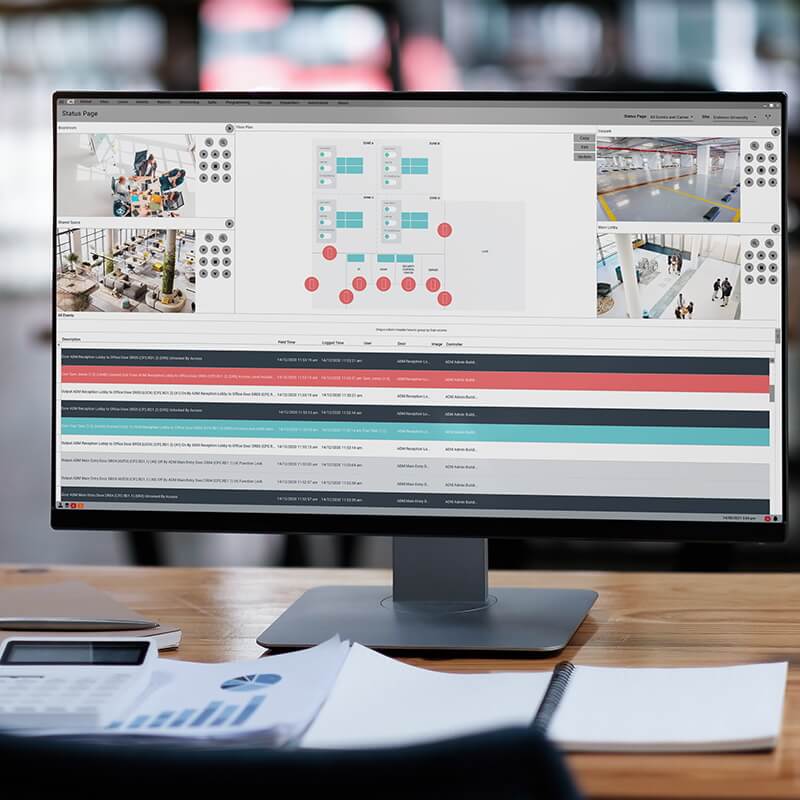
ICT’s mobile credentials solution integrates directly with the Protege platform, offering smartphone access for both Protege GX and Protege WX systems. Users enroll through a simple mobile app, and administrators manage credentials through the same Protege interface used for all other access control operations.
The solution supports Apple Wallet and Google Pay integration, meaning credentials live alongside payment cards and boarding passes — no separate app required for basic access.
Whether you’re planning a full migration or testing the waters with a pilot program, mobile credentials offer a clear path to a more secure, more convenient access control experience.