











TSL Standard
Multi-Technology Card Reader
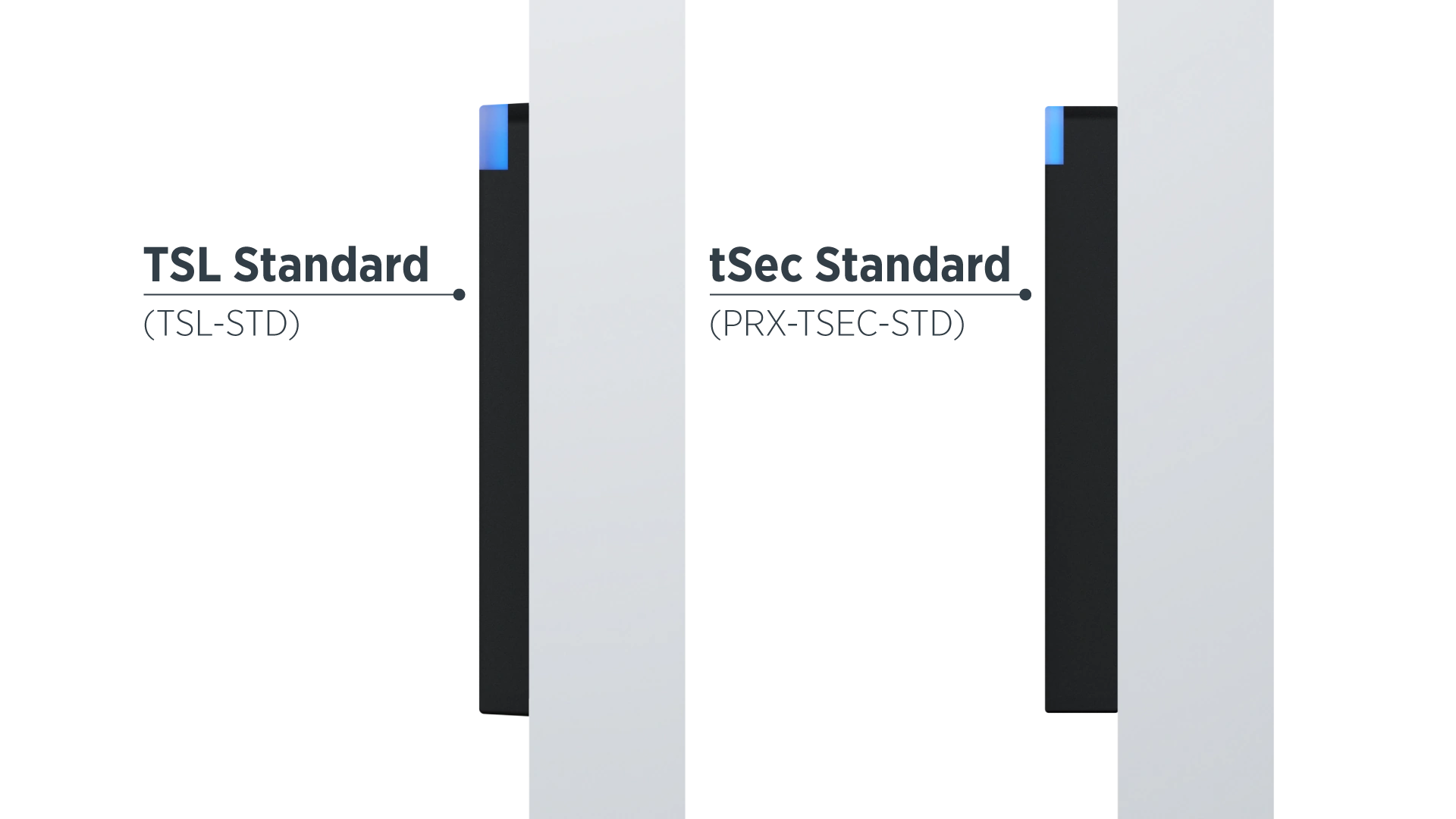
TSL-STD
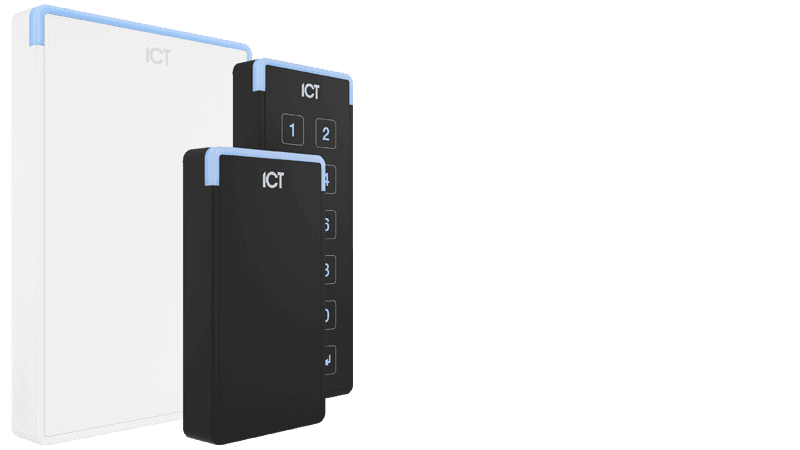
With a compact slimline design and a range of options and features, the TSL Standard Multi-Technology Card Reader has a solution for every environment. Support for RS-485, OSDP and Wiegand communication interfaces, along with leading credential technologies, enables rapid deployment of secure access control technology.
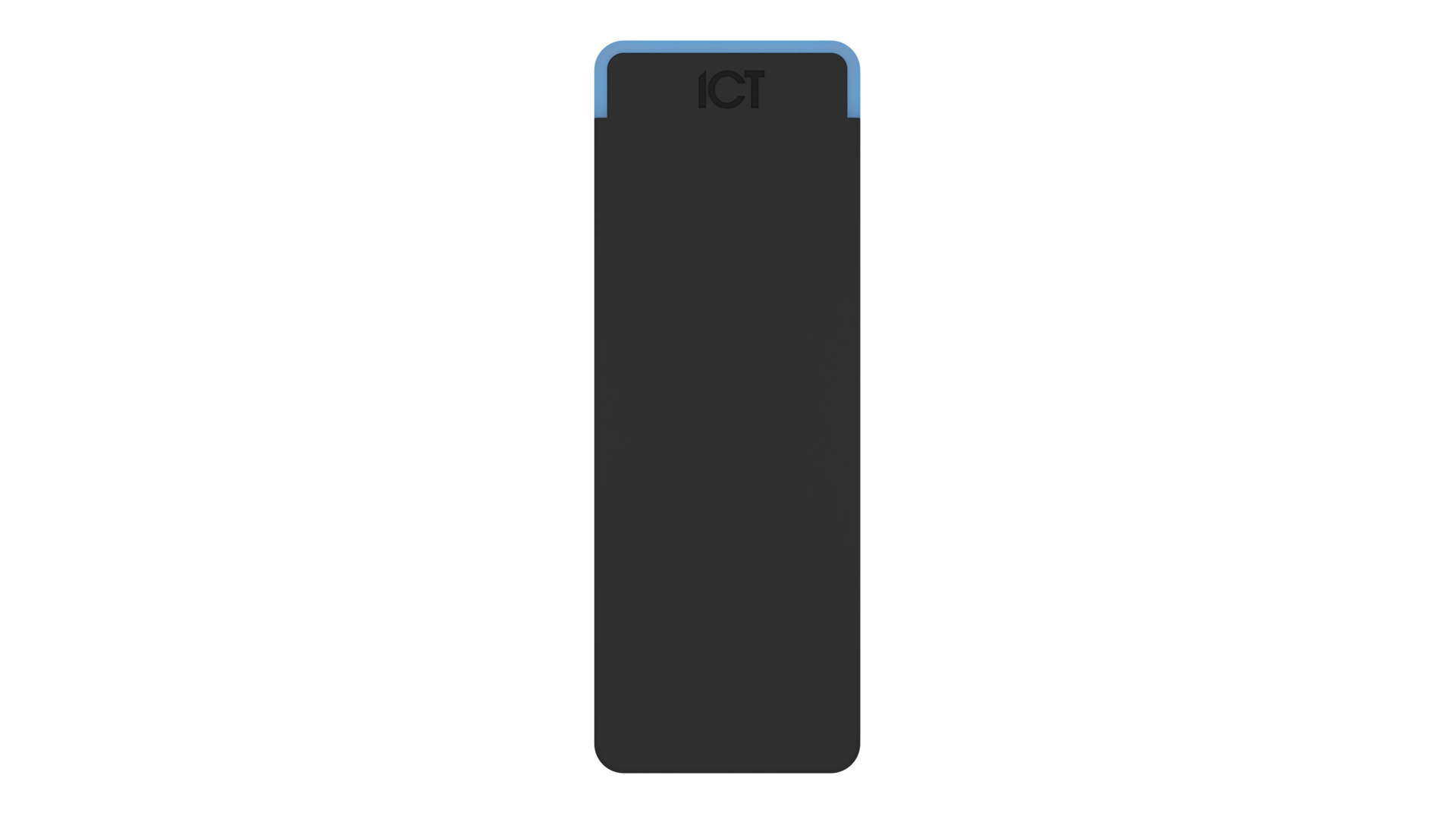
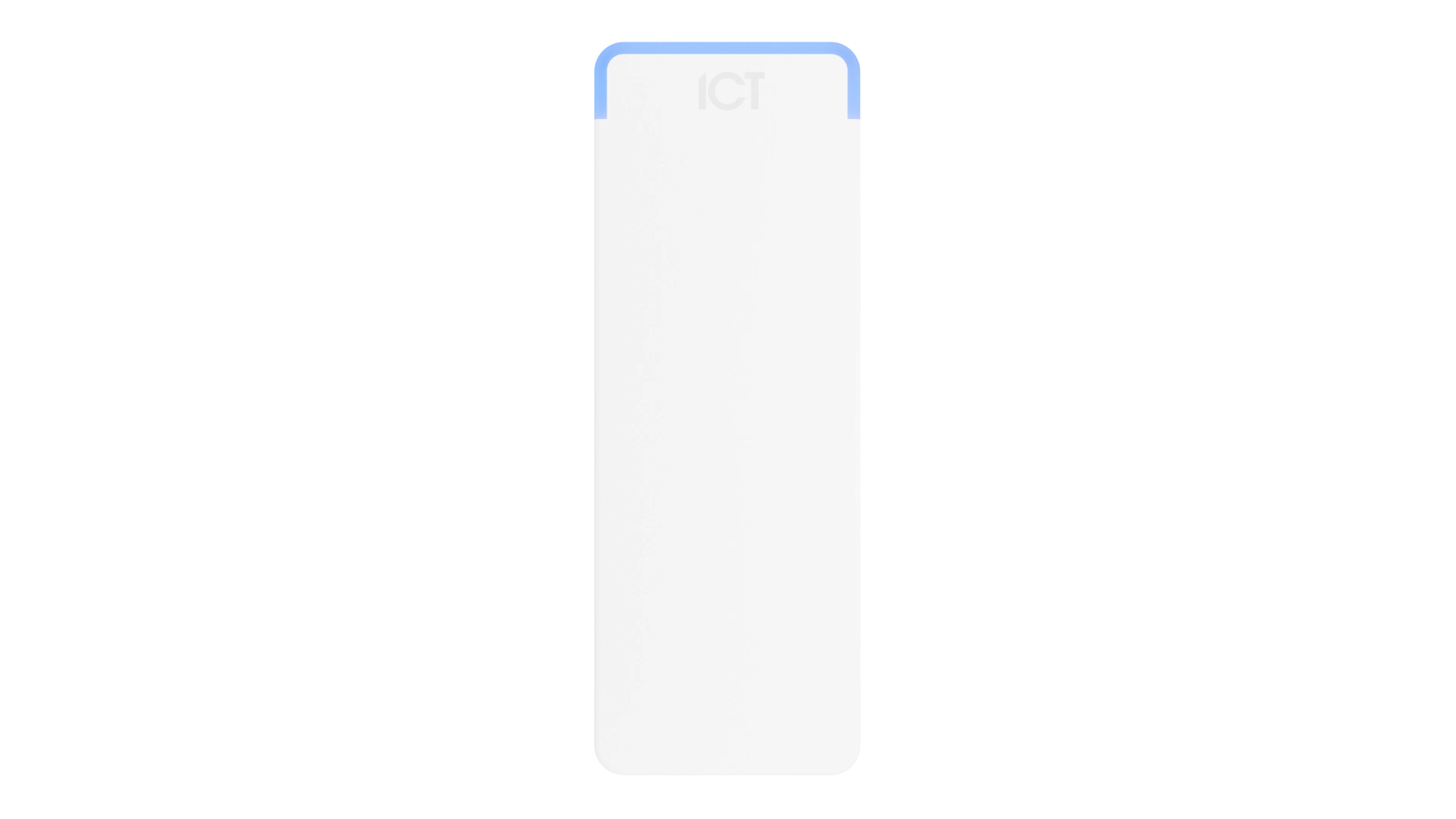
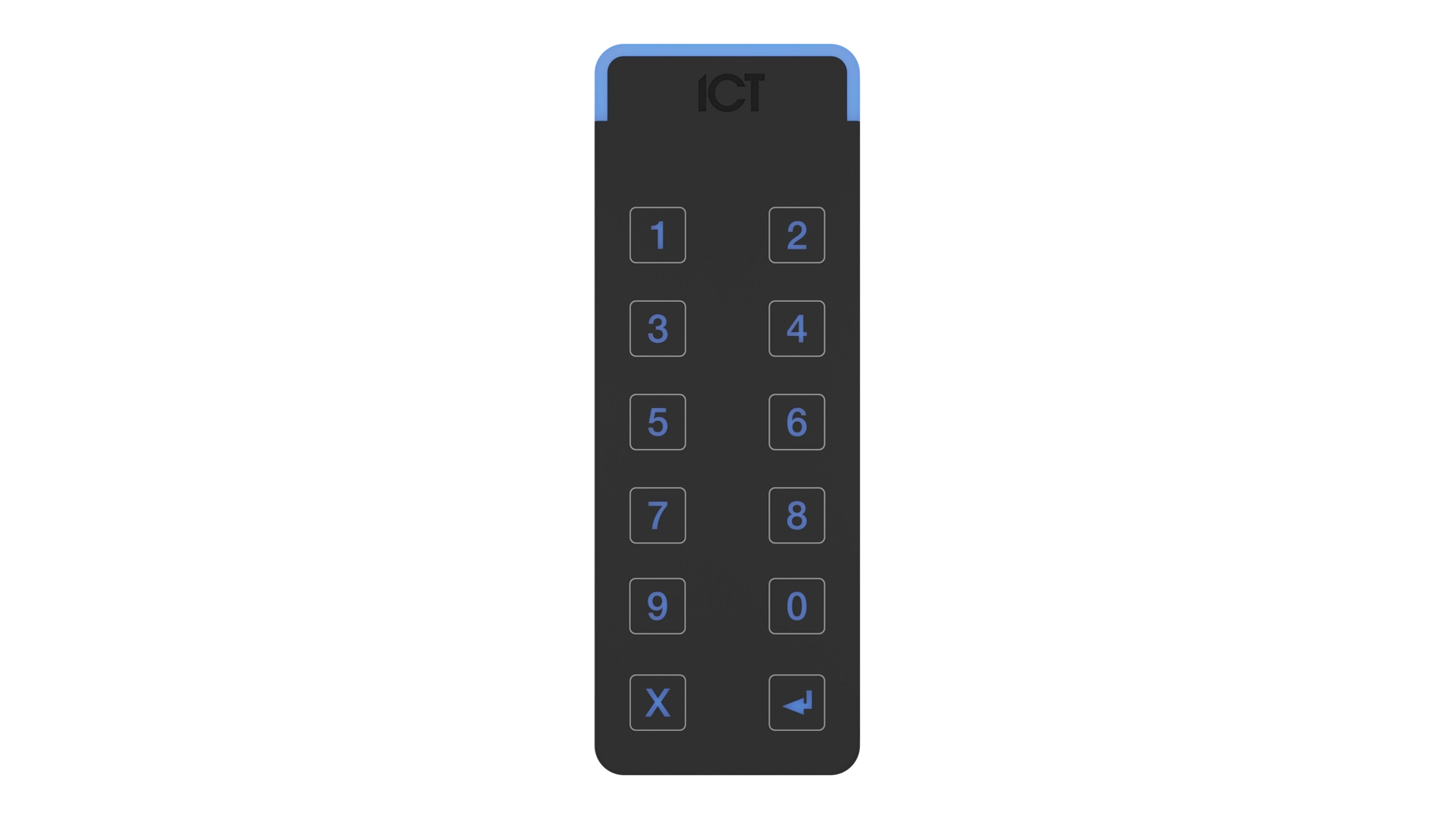
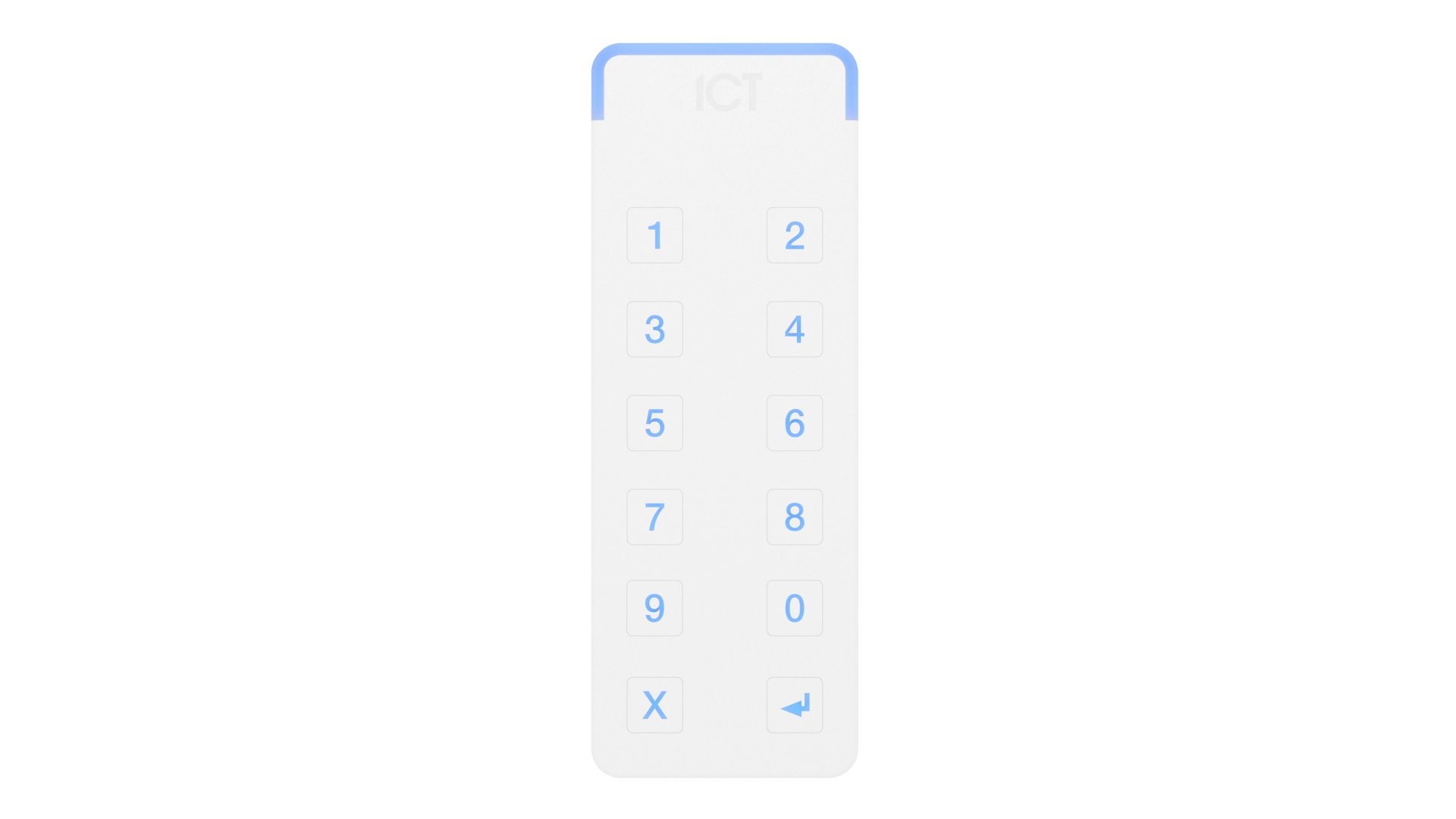
Available with or without a capacitive touch keypad, choose from a multi-technology reader combining both 125kHz proximity and 13.56MHz formats, or a dedicated 13.56MHz MIFARE/DESFire reader. Select black or white to match any decor.
- Multi-card technology provides support for DESFire, MIFARE and 125kHz cards from a single reader
- Bluetooth / NFC credential reading for smartphone-based access
- EAL6+ Secure Access Module (SAM) for robust protection of encryption keys
- Encrypted RS-485, OSDP with secure channel or standard Wiegand connection
- Live over-the-network firmware updates from the controller’s web interface
- 16-color configurable LED strip for status display
- IP65 rated for indoor and outdoor operation
- Programmable using a convenient mobile app
Features
Multi-Card Technology
TSL Readers can read a range of different card types including 13.56MHz smart cards (MIFARE and DESFire) and 125kHz low frequency cards with native PSK and G-Prox II support. The multi-technology reader combines both capabilities in a single unit, delivering a migration pathway for sites to transition from older cards to the latest technology. This is ideal for organizations that don’t want to replace all of their existing cards at once.
Bluetooth / NFC Credential Reading
Bluetooth / NFC capability enables you to use your smartphone as your access credential for maximum convenience. Equipped with support for most modern iOS and Android devices, you can unlock the door using a unique access credential that is entered against your user record in Protege, and authenticated by a secure cloud based server.
Secure Access Module (SAM)
The TSL Reader protects all encrypted communications with an EAL6+ certified Secure Access Module (SAM), greatly enhancing cybersecurity compared to the previous generation of card readers. The SAM is a dedicated cryptographic chip that safeguards encryption keys and handles encryption and decryption processes whenever the reader communicates with credentials or other hardware. The isolated chip provides the highest possible level of security for private encryption keys, making it much more difficult for attackers to access them.
Live Over-the-Network Firmware Updates
TSL Readers can be upgraded directly from the controller’s web interface with no need to remove card readers from the wall, reconfigure the wiring or schedule downtime. The reader will remain operational and respond to card badges and PINs as normal while the controller uploads the firmware package via the RS-485 network. The TSL Reader then does a quick reboot and comes back online with the new firmware. Signature verification confirms the authenticity of firmware updates, ensuring that only firmware files from a trusted source will be accepted.
Flexible Communication
TSL Readers offer multiple communication protocols for maximum installation flexibility. The industry-standard OSDP 2.2 protocol provides the best security and compatibility with Protege and third-party systems, with unique AES-128 bit encryption per reader. ICT RS-485 configuration provides fast, flexible and encrypted communication with Protege systems. Wiegand wiring is available for compatibility with all standard access control systems but is not recommended for new installations as it is not encrypted.
Configurable LED Strip
The card reader provides the ability to change the color of the LED strip (16 colors available) to show when a function has started, succeeded or failed. For example, for a function that is used to arm an area you might set the LED to change to orange to show that the function has started, yellow to show that the area has armed successfully, and red to indicate when the function has failed.
Offline Wireless Lock Support
TSL readers form an essential component of the ICT offline wireless locking system. In this system, all programming, access data and events are carried on user cards and mobile devices. TSL readers at key locations in the building act as update points, updating access data and retrieving events whenever a user badges their credential.
IP65 Protection
The IP65 environmental rating provides a high degree of protection from the elements, making the reader suitable for harsh environments. Readers can be mounted indoors or outdoors, located anywhere from the car park gate to the office door.
Specifications
| Ordering Information | |
| TSL-STD-RR-HL | TSL Standard Multi-Technology Card Reader with Bluetooth Wireless Technology |
| TSL-STD-RK-HL | TSL Standard Multi-Technology Card Reader with Bluetooth Wireless Technology and Keypad |
| TSL-STD-RR-H | TSL Standard 13.56MHz Card Reader with Bluetooth Wireless Technology |
| TSL-STD-RK-H | TSL Standard 13.56MHz Card Reader with Bluetooth Wireless Technology and Keypad |
| Power Supply | |
| Operating Voltage | 12VDC (9.5 to 14VDC) |
| Operating Current | 165mA (Peak, Reading) |
| Communications | |
| RS-485 | Encrypted ICT RS-485, maximum cable run 900m (3000ft) |
| OSDP | OSDP standard 2.2 with Secure Channel Protocol, maximum cable run 900m (3000ft) |
| Wiegand | Multiple format 26, 34 or 37, customizable; Bit data 0 and data 1 sent at 1kHz, maximum cable run 150m (492ft) |
| Frequency | |
| 13.56 MHz | ISO/IEC 14443 Type A |
| 125kHz | Carrier with several modulation formats supported |
| Bluetooth Wireless Technology | |
| Read Range | Up to 0.5m (1.6ft), configurable |
| Version | Bluetooth version 5.1 compliant |
| Transmission | Proprietary data exchange protocol, AES-128 encrypted |
| NFC | |
| Read Range | Up to 60mm |
| Compatibility | Android 4.4 or above, with phones which support ISO7816-4 |
| Credential Security | Proprietary Secured DESFire credential, AES-256 (NIST certified AES algorithm) |
| ISO Card Read Ranges | |
| 125kHz | 40mm (1.6") |
| MIFARE Classic | 60mm (2.4") |
| DESFire EV1 | 20mm (0.8") |
| DESFire EV2 | 30mm (1.2") |
| DESFire EV3 | 20mm (0.8") |
| Security | |
| Security Level | Contains EAL6+ Certified Secure Access Module (SAM) |
| Dimensions | |
| Dimensions (H x W x D) | 117 x 43 x 9.5mm (4.6 x 1.7 x 0.37") |
| Net Weight | 60g (2.1oz) |
| Gross Weight | 100g (3.5oz) |
| Operating Conditions | |
| IP Rating | IP65 |
| Operating Temperature | UL/cUL -35° to 66°C (-31° to 151°F) : EU EN -40° to 70°C (-40° to 158°F) |
| Storage Temperature | -10° to 85°C (14° to 185°F) |
| Humidity | 0%-95% non-condensing, indoor/outdoor use (relative humidity) |
| MTBF | 520,834 hours (calculated using RDF 2000 (UTE C 80-810) Standard) |
Downloads
User Documentation
Firmware
Supporting Material
Certifications & Warranties
Regulatory Notices
RCM (Australian Communications and Media Authority)
This equipment carries the RCM label and complies with EMC and radio communications regulations of the Australian Communications and Media Authority (ACMA) governing the Australian and New Zealand (AS/NZS) communities.
AS/NZS 2201.1 Class 5
Protege systems conform to AS/NZS 2201.1:2007 Class 5 intruder alarm systems standards for the construction, operation, performance and installation of intruder alarm equipment and systems installed in clients' premises.
CE – Compliance with European Union (EU)
Conforms where applicable to European Union (EU) Low Voltage Directive (LVD) 2014/35/EU, Electromagnetic Compatibility (EMC) Directive 2014/30/EU, Radio Equipment Directive (RED) 2014/53/EU and RoHS Recast (RoHS2) Directive: 2011/65/EU + Amendment Directive (EU) 2015/863.
This equipment complies with the rules of the Official Journal of the European Union, for governing the Self Declaration of the CE Marking for the European Union as specified in the above directives.
Security Grade 4, Environmental Class II, EN 50131-1:2006+A2:2017, EN 50131-3:2009, EN 50131-6:2008+A1:2014, EN 50131-10:2014, EN 50136-1:2012, EN 50136-2:2013, EN 60839-11-1:2013, Power frequency magnetic field immunity tests EN 61000-4-8, Readers Environmental Class: IVA, IK07.
UK Conformity Assessment (UKCA) Mark
This equipment carries the UKCA label and complies with all applicable standards.
UL/cUL (Underwriters Laboratories)
UL 294 for Access Control System Units
CAN/ULC 60839-11-1 for Electronic Access Control Systems
Industry Canada
ICES-003
This is a Class A digital device that meets all requirements of the Canadian Interference-Causing Equipment Regulations.
CAN ICES-3 (A)/NMB-3(A)
Federal Communications Commission (FCC)
FCC Rules and Regulations CFR 47, Part 15, Class A.
This equipment complies with the limits for a Class A digital device, pursuant to Part 15 of the FCC rules. Operation is subject to the following two conditions: (1) This device may not cause harmful interference; (2) This device must accept any interference received, including interference that may cause undesired operation.