














Access Control in Healthcare: Balancing Security, Compliance, and Patient Care
A Unique Security Challenge
Healthcare facilities are unlike any other environment. They must be simultaneously accessible — patients, visitors, and emergency responders need to get in quickly — and tightly controlled, protecting drugs, equipment, patient records, and vulnerable individuals.
This tension between openness and security defines every access control decision in healthcare.
High-Risk Areas Requiring Special Control
Not all areas of a hospital or clinic carry the same risk. Effective healthcare access control starts by identifying which zones need the strictest protection:
Pharmaceutical storage — medication rooms and dispensaries must restrict access to authorized clinical staff, with full audit trails of every entry and exit.
Medical records and data centers — HIPAA, GDPR, and equivalent regulations require documented evidence of who accessed protected health information.
Pediatric and psychiatric wards — patient safety depends on controlling who can enter and exit these sensitive clinical areas.
Operating theaters and ICUs — sterile environments require hygiene-compliant access solutions that don’t introduce contamination risk.
Emergency department — must balance rapid access for clinical staff with control over public entry.
Regulatory Compliance and Audit Trails
Healthcare organizations are subject to rigorous compliance requirements. Access control systems must provide:
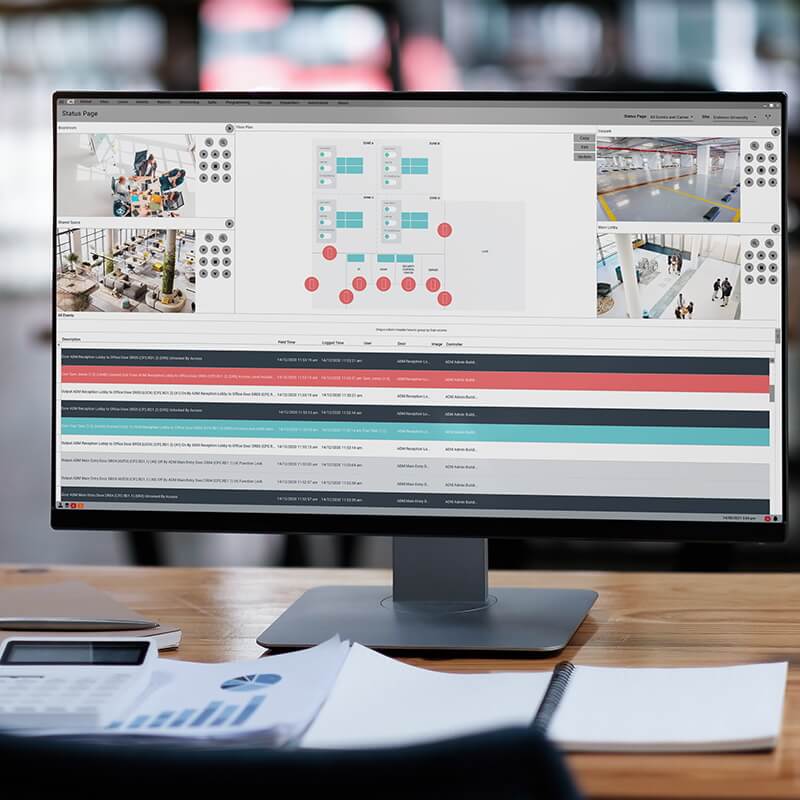
- Complete audit logs — who accessed what area, at what time, with what credential
- Exception reporting — automatic alerts when access patterns suggest unauthorized behavior
- Role-based access control — permissions that align with clinical roles and responsibilities
- Integration with HR systems — credentials automatically provisioned and deprovisioned as staff join, move, or leave
The cost of a compliance failure — regulatory fines, reputational damage, liability — far exceeds the cost of a properly designed access control system.
Credential Considerations
Healthcare environments require flexible credential options:
Proximity and smart cards remain standard for most clinical staff. They’re fast, familiar, and easy to replace.
PIN-only access is appropriate for low-risk areas and can supplement cards for multi-factor authentication in high-risk zones.
Mobile credentials are gaining traction as smartphone policies evolve in clinical settings. The ability to issue temporary credentials to agency staff and contractors is particularly valuable.
Biometrics — fingerprint or facial recognition — are increasingly used in pharmaceutical dispensing and high-security research areas where card sharing would be a risk.
Protecting Patients and Staff
Access control in healthcare isn’t just about protecting property and data. It protects people.
Wander management systems use access control to prevent patients with cognitive impairments from leaving secure areas undetected. Door monitoring and alert systems notify staff instantly when a patient attempts to exit through a controlled door.
Duress systems allow staff to trigger silent alarms directly from access points — critical in situations involving aggressive patients or visitors.
Emergency lockdown capabilities enable rapid response to security incidents, isolating affected areas without disrupting patient care in adjacent zones.
How ICT Supports Healthcare Security
ICT’s Protege platform is deployed in healthcare facilities globally, including university hospitals, regional medical centers, and specialist care facilities.
The system’s role-based access control, comprehensive audit trails, and integration with nurse call and building management systems make it well-suited to the complex demands of clinical environments.
ICT holds ASIAL Class 5 certification — demonstrating a level of system security appropriate for sensitive institutional environments — and integrates with leading video management and intercom systems for complete situational awareness.
If you’re evaluating access control for a healthcare facility, our team can help you map your requirements to a compliant, practical solution.