









Retail Security: How Access Control Reduces Shrink and Protects Staff
The Retail Security Challenge
Retail security has always been a balancing act. Every measure that deters theft has the potential to inconvenience legitimate customers and staff. Every door locked against shoplifters is a barrier between customers and the products they want to buy.
The best retail security systems resolve this tension — providing invisible protection that keeps the store open and welcoming while deterring and detecting theft.
Where Access Control Makes a Difference
Access control is most impactful in the areas of a retail environment that customers never see — and those are also the areas most vulnerable to loss.
Back-of-house and stockrooms — product moving between loading docks and the shop floor is often the highest-risk point in the retail chain. Controlling who can access stockrooms and when dramatically reduces internal theft opportunities.
Cash offices and safes — tiered access control ensures only authorized personnel can enter cash handling areas, with complete logs of every entry.
IT and server rooms — retail organizations hold significant customer data. Physical security of server infrastructure is a compliance requirement under PCI-DSS and other standards.
Staff areas and lockers — protecting employee belongings builds trust and morale while reducing the risk of internal theft.
Internal Theft: The Underreported Problem
Research consistently shows that internal theft accounts for a significant proportion of retail shrink — often equal to or exceeding external theft. Access control addresses this directly:
- Controlled stockroom access means every product movement is logged
- Time-restricted credentials prevent access outside shift hours
- Audit trails provide evidence for investigations
- The visible presence of an access control system deters opportunistic theft
Integration with Video Management
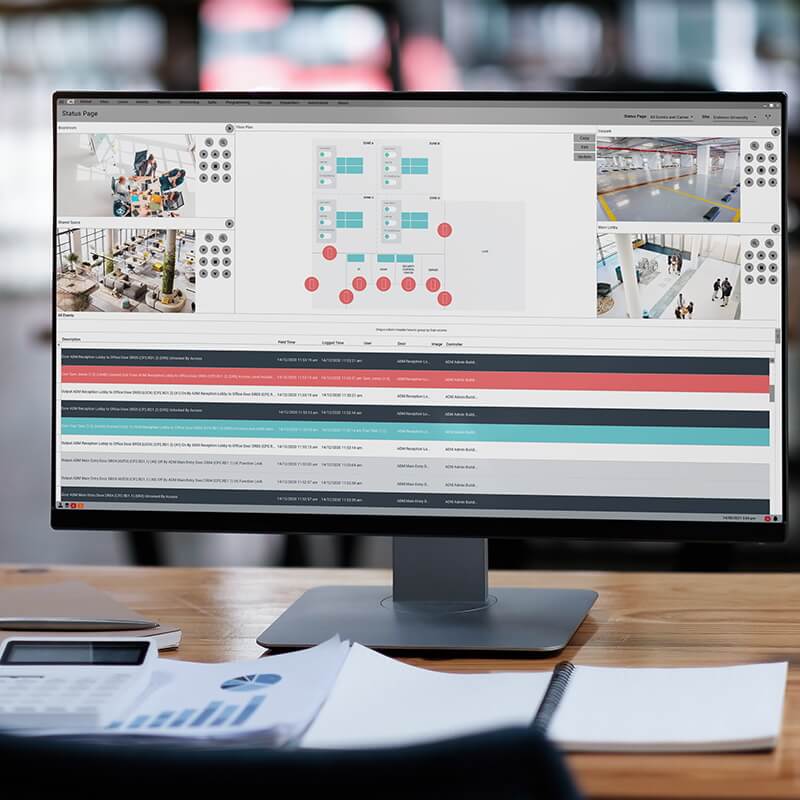
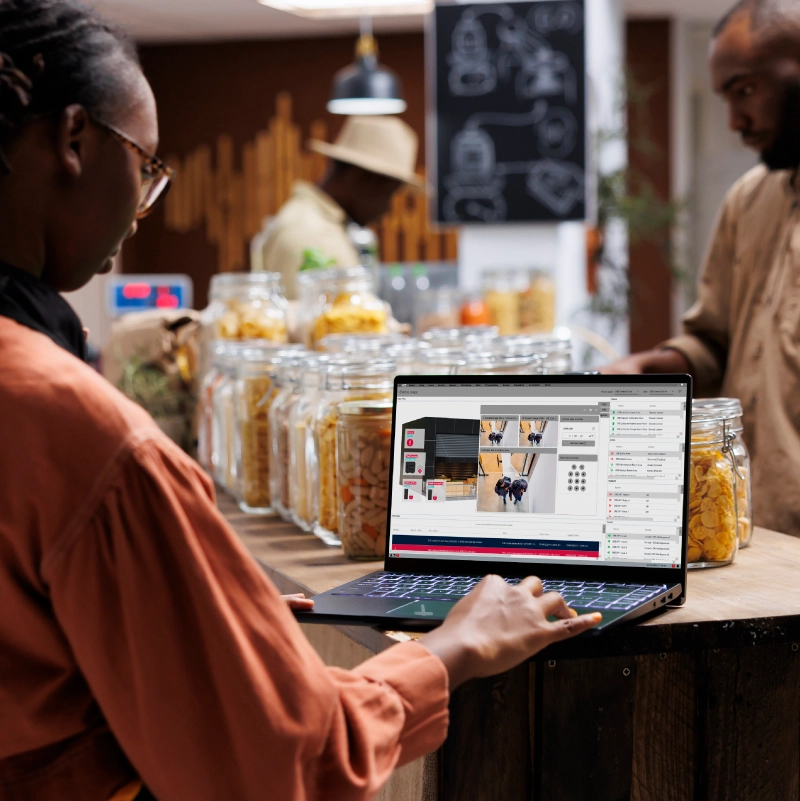
Access control is most powerful when combined with video surveillance. When an access event occurs — particularly an unusual one — operators can immediately retrieve footage of that event. This eliminates hours of manual review when investigating incidents.
Modern integrations trigger automatic camera recording when access is granted to high-risk areas. Exception events — forced doors, repeated failed attempts, access outside permitted hours — generate instant alerts with associated video.
Staff Safety and Duress
Retail staff face real safety risks, particularly in isolated areas of large stores, during late-night trading, or in challenging customer interactions.
Integrated access control supports staff safety through:
Personal duress alerts — staff can silently signal for help through their access credential or a dedicated panic button.
Lone worker monitoring — access events confirm staff are moving through the building as expected; anomalies trigger welfare checks.
Emergency lockdown — in the event of a critical incident, the entire store or specific areas can be locked instantly from a central interface.
Getting More from an Existing Infrastructure
Many retailers already have access control hardware in place. A modern platform like Protege GX can often integrate with existing readers and door hardware, significantly reducing the cost of upgrading to a more capable system.
The ROI calculation is straightforward: if better access control reduces shrink by even a fraction of a percent, the system pays for itself rapidly in a typical retail environment.
ICT’s team works with retail groups of all sizes — from independent stores to national chains — to design access control strategies that protect profit, people, and brand reputation.