













What Banks Are Getting Wrong About Physical Security — And How to Fix It
Insights from ICT and DAC’s “Doing More with Less” Webinar
Banking security leaders are caught in a familiar bind: more branches to protect, greater risk to manage, evolving operational demands — and smaller teams and tighter budgets to do it all with.
It’s not a new problem. But for many institutions, the systems they’re relying on are making it worse.
In a recent webinar co-hosted by ICT and DAC, regional security experts — including ICT Regional Sales Managers Travis Chaffin and Alex Sawhney, alongside DAC’s Director of Business Development Kent Howell and Senior Account Executive John Valadez — shared the strategies, mistakes, and questions that define the difference between a security program that scales and one that quietly costs you.
Here’s what came out of the conversation.
The Root Problem: Fragmentation
Banks that have grown through acquisitions often inherit a patchwork of disconnected security systems — each with a different interface, a different management workflow, and a different set of capabilities. The day-to-day cost of that fragmentation is easy to overlook until the workload becomes unsustainable.
“The biggest issue is fragmentation — having too many systems. Each one is different to use, different to manage, and may or may not have the same features,” said Travis Chaffin, Regional Sales Manager for Central and North Texas at ICT.
The operational drag doesn’t stop at the user interface. When systems don’t integrate, troubleshooting becomes a time-consuming exercise in chasing down answers across disconnected platforms.
“When systems don’t talk to each other, the backend troubleshooting aspect is a big time waster,” added Kent Howell of DAC.
The Fix: Standardize on One Platform
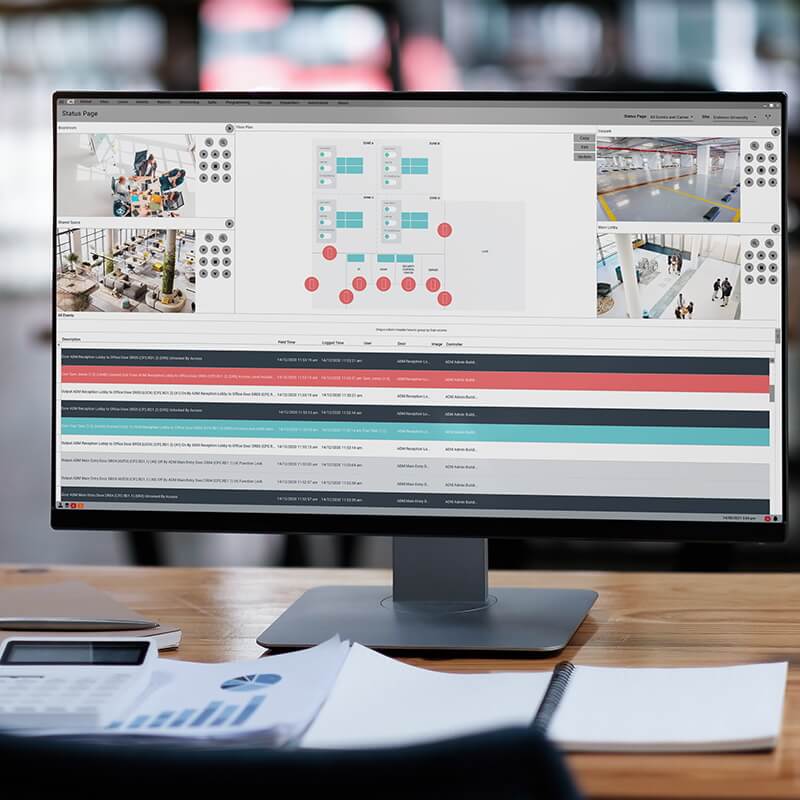
The antidote to fragmentation isn’t just newer technology — it’s committing to a single, unified platform across every location. Standardization reduces training burden, accelerates branch onboarding, and makes compliance reporting something your team can actually manage.
“How do you achieve doing more with less? How do you become compliant? How do you bring branches on quicker? It’s really about standardizing the product you’re using,” Howell said.
For multi-branch institutions, that shift is transformational. Panelists shared examples of IT teams that once drove hours to troubleshoot individual branches and now rarely leave headquarters.
“Having that central visibility, that central location where you can handle basic functionality, is a huge aspect. You need immediate eyes on it if something isn’t functioning properly,” said Alex Sawhney, Regional Sales Manager for South Texas at ICT.
One year after completing a standardization project, Howell reported back a telling outcome from a client’s IT team: “We never have to go to a branch anymore. They just stay in headquarters. That’s a good problem to have.”
The Hidden Cost of Siloed Systems
Separate systems don’t just create operational friction — they create financial exposure. Without a unified view across all locations, banks lose visibility into equipment health, lifecycle planning, and budget forecasting. Unexpected hardware failures become budget emergencies instead of planned line items.
“A unified platform can tell you when your cameras or card readers are approaching end of life, so you can plan for it, budget for it, instead of scrambling when something goes down,” said John Valadez of DAC.
That predictability matters more than most security buyers realize. The real cost of a siloed system isn’t just the maintenance — it’s the operational disruption and unplanned spend that erodes budget confidence over time.
Ask the Weird Questions
One of the more memorable moments in the webinar wasn’t about technology at all. It was a reminder that the best security outcomes come from clients who know how to describe what they want — not just what they think is possible.
“A lot of times, things get lost when we’re too rigid with vocabulary. Tell us what you want to happen. Then let the professionals make it work,” said Chaffin.
The practical takeaway: don’t limit discovery conversations to standard security terminology. Describe desired outcomes. Be specific about scenarios you’re planning for — even the ones that seem unlikely.
“Ask the weird questions. Ask about scenarios you want to plan for. If you don’t ask, we might not know that something is important to you and your system needs,” said Sawhney.
Questions Every Bank Security Leader Should Be Asking Right Now
The webinar closed with a set of questions the panelists recommend every financial institution work through — ideally with their security integrator:
Is our current system still supported? End-of-life hardware creates emergency replacements. Build system lifecycle reviews into your annual security audit.
Can we absorb five new branches tomorrow? If the answer is uncertain, your platform isn’t built for growth. Scalability should be a requirement, not an afterthought.
Who else needs a seat at the table? Security decisions touch IT, HR, and operations. Bringing them in early prevents costly misalignment later.
What happens when something goes down? Ask your integrator: What’s the response time? Are remote diagnostics available? What’s the plan if a branch goes offline?
Are we including security in our AI conversation? AI is already changing physical security — from intelligent video monitoring to predictive alerts. Ask vendors how they’re investing in it now, and make sure it’s part of your budgeting conversations.
The Bottom Line
Banks that standardize on a unified security platform aren’t just improving security — they’re reclaiming time, reducing cost, and building an infrastructure ready for whatever growth comes next.
The right security integrator doesn’t just install a system. They help you think through every scenario, ask the questions you haven’t thought of yet, and build something that grows with you.
Want to hear the full conversation? Watch the complete webinar here.